
Episode 618- Tim Russ Interview
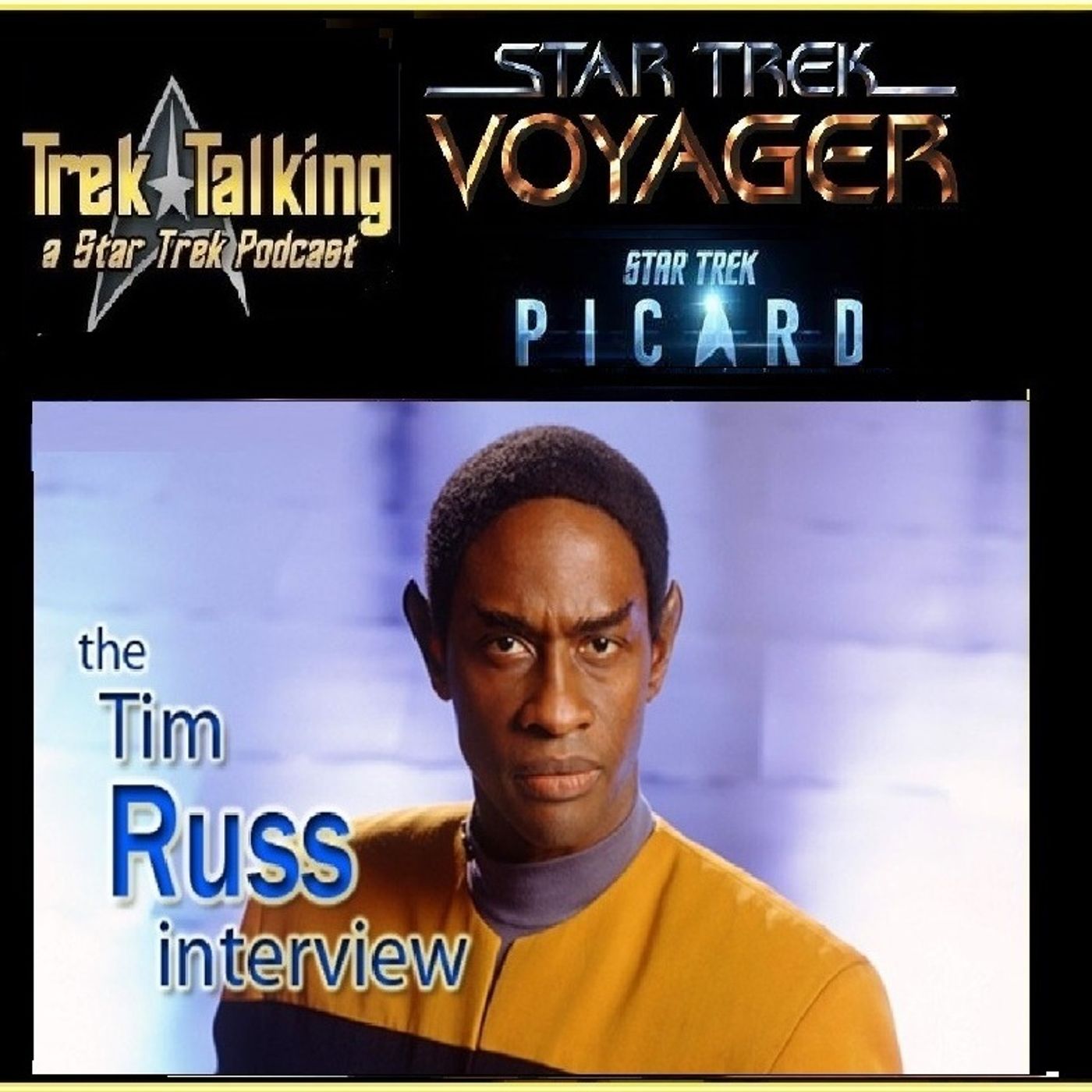
Tim Russ talks about such things as:
- Tim Russ shares his excitement for the 30th anniversary of Star Trek Voyager.
- The importance of character backstory in developing Tuvok's character.
- Tim's experience working with Mel Brooks on Spaceballs was...

 Apple Podcasts

 Spotify

 Castro

 RSS Feed
Tim Russ talks about such things as:
- Tim Russ shares his excitement for the 30th anniversary of Star Trek Voyager.
- The importance of character backstory in developing Tuvok's character.
- Tim's experience working with Mel Brooks on Spaceballs was brief but memorable.
- Tim discusses the differences between working on feature films and TV series.
- The Vulcan character serves as a commentary on the human condition.
- Tuvok's character is complex, showcasing both logic and emotional depth.
- The dynamic between Tuvok and Neelix adds depth to the series.
- Tim reflects on the moral dilemmas faced by characters in Star Trek.
- The filming of fan films presents unique challenges and experiences. The disorganization in filmmaking can lead to chaotic results.
- Working with talented musicians can enhance an actor's performance.
- A long career in music can shape an artist's style and preferences.
- The Orville offers a unique blend of humor and homage to Star Trek.
- Single-camera shooting requires precision and can be monotonous.
- Tim Russ enjoyed the opportunity to work with Patrick Stewart.
- The influence of new characters can change the dynamics on set.
- Behind-the-scenes laughter can lighten the long hours of filming.
- Music is a significant part of Tim's life and influences his work.
- Indie projects often allow for more creative freedom than television.
- Tim Russ has auctioned off his Tuvok ears for charity.
- Directing offers a broader canvas for creative expression than acting.
- Tim enjoys performing music and has several songs available online.
- He has a biopic in development set during World War One.
- Tim's music style is eclectic, featuring unique arrangements and mashups.
- Tim's favorite episodes often involve unique storytelling and strong collaborations.
0:07 Okay, Jean Ways Fox Beer Look is acting very weird. Captain Pikes, Cisco's wife, King ons and me after. Like Boimer, Tendi Stargarransom. Is very hard, Scot Drive black alert, Torgio has gone perserved, Pecha bad laugh, Edward is any Pakistan? Wolf is were Checkov's wearing red, Tita's cat cam back sat you has had enough for that? Penny up make it so, everybody, let's. Go about the series. As up the phone.
0:48 Now talk about the series. I'm coming to your services. Now we talk about the series. Now, Jam. Well, good evening, Trekky's and Trekers around the globe. It's January sixteenth, twenty twenty five. Welcome to episode six hundred and nineteen of trek Talking. I'm your most excellent host, Uncle Jim, and we have a great show plan for you guys. Tonight we're gonna be talking with the one and only Tim Russ. But before we go too far, i'd like to introduce my treks perts. Will start off with Eric. Eric is out in Portland. How you doing tonight, Eric?
1:38 I'm doing pretty good. Jim. I'm extremely excited, of course about tonight's show. As you know, I'm a huge Voyager fan and U two box my boys, So thanks Tim for being here. Also from Portland, we have Paul the toy guy. How you doing tonight? Paul? I am so much more than toys. Jim really don't narrowly can find me. I mean see the Holemie, but that's for another time. But I am as my friend Eric, just busting at the seams with many questions and curiosities for our wonderful guest tonight. So it's exciting, it's gonna be fun. And also from Portland, we have David. He's our Scottie on the show. How are you doing tonight? David?
2:22 Pretty good? Pretty good. I'm actually really super excited as well. So I'm welcome Tim, and I hope you enjoyed. The show excellent. And believe it or not, he's not from Portland. We have Charles. He's out in Las Vegas. How you doing, Charles? Good? Uncle Jim. Glad to have rest Tim here and looking forward to the conversations and the story. Gonna be fun. You guys can go to trek talkin dot com and you can find all of our previous shows. There's also a little blue talkback mic in the bottom right hand corner. Wease feel free to click on that mic and leave us a message and we will play it on the very next podcast. You can also help support the podcast by visiting our Patreon page Trek Talking Podcast, which Charles is putting together for us. So check that out if you get a chance. And let me see.
3:14 There's one thing I got to start off the show with. I got to say happy birthday to Star Trek Voyager, which turned thirty today. Believe it or not, it was today in nineteen ninety five when Caretaker aired and uckily for us, we have Tim Russ with us to share with us. That was just a stroke of luck, by the way, that wasn't planned. It just happened that way. So happy birthday to Star Trek Voyager, and we have mister Russ here to celebrate that with us. So I just want to feel you guys in a little bit. Everybody knows that Tim played mister Tuvac and he's been involved in Star Trek, and we're going to talk about a lot of that tonight. But in nineteen ninety five he also co wrote a story from Malibu Comics Trek Deep Space nine, number twenty nine and number thirty. So he's also delved into some comic books, and he performed voice acting roles as Tuvac for the Star Trek video game Star Trek Voyager, Elite Forces and Elite Forces too.
4:15 He's also a director and he starred in the fan film series Star Trek of Gods and Men, which by the way, was filmed right here in tight Conder Roga not too far for where I'm sitting right now. And he also co starred in Star Trek Rennegades and reprised his role as the voice of Tubac and the massively multiplayer online game Star Trek Online. So welcome to the podcast him. It's great to have you here. Thank you very much for having me. Guys, thank you. And I want to start out by asking you a question about a little tiny part that you had in a little tiny movie quite a while ago, which I'm sure you get asked about a lot, And I just want to know what it was like working with mel Brooks on Spaceballs. You knew that had to come.
5:04 Up Spaceballs, you know it was you know, it was just a day's worth of work. We shot out in you My Arizona, and it was just it was just one day's worth of work, and it was he was lovely to work. It's very nice. I got a picture with him and the whole thing, so it was great. But it was just a you know, just a day's worth of work. It didn't take that long to pop that off. And of course it's gone on to live in infamy as it were, become a cult classic, which I was not even thinking about when I worked on it. So twenty five thirty years later I discovered that it's extraordinarily popular.
5:48 I think I think a lot of Sci fact fans go around quoting lines from that movie. It's just yeah, it's a great movie. Yeah, quite a few people actually, yeah. Yeah. And you you had the honor of working on that film, so that was great. Actually, we just just watched it the other night, just so that I could refresh myself on your lines such as they were. Yeah, you gotta work on those. It's a long, complicated piece. Yes. And I'm also I'm a huge Klingon fan, and I know I was reading in your bio that you played a Klingon on Star Trek Deep Space nine. Yes, and I wanted to ask you a little bit what was it, What was it like? Playing a kling on.
6:39 First of all, how did you get into that cling on that warrior mode? And what was it like guest starring on a show like like Deep Space nine versus being a regular on Voyager. Well, you know, that was before Voyager, So it was just it was just a step along the line of working than the franchise that occurred, you know, prior to actually working on Generations, and the producers I think at the time Brick Berman was in charge, so he liked my work. He enjoyed, you know, working with me on the shows and the franchise, so he kept bringing me back, you know, eventually back on Generations and then eventually back on Voyager. And I was lucky enough to to be available and to be right for that role and Voyager when they put it together. Nothing but timing on all of that. So that that's how it turned out. And it could have been completely different, you know. Ah, you know, I could have just as easily ended up on a series Baywatch or something, you know, instead of that. It just came down to being right. The timing being right for me to be ready for that role.
8:00 All worked out for the best in the end, Yeah, it did. Yeah, Now, what was it like working on on Generations versus working on a TV series. Generations was, well, the pace is generally slower feature films. You don't usually shoot that many pages per day, especially when they're you know, big budget movies like that. You know, the smaller budget stuff, the little independent b movies and things like that, those are typically more pages per day when you're shooting there. It's a very slow pace on a feature film and you're only shooting a few pages a day. And it was great. The director was great. I worked with Shatner, James Dowin that day, Walter Kanig, Walter, and George t Ka, So it was great to be on the bridge with all of them and to be able to to take part in that feature, ironically enough, playing a tactical officer in that but as a human, not as a bulk. But it was great. It was It was very easy, it was very smooth, and at the time I was working on Generations at that time.
9:11 That week, Berman walked up to me two times, two different times and said, you know, we're working on a new series. You know that we're going to be casting in the summer of the of the next year, and so he and he said, I'm interested in having you read for one of the roles. So he told me that when I was working on Generations, so I knew that something was coming down the line, certainly a potential for another perhaps a full time job on a series Trek series, because he did tell me that that was a good possibility it was going to happen. Now, when when Star Trek Voyager did the episode Flashback, you had the opportunity to go back and work with George and the late Grace Lee Whitney.
9:59 What was that like, Well, it was wonderful because you know, in that first of all, it was a backstory for the character. And you know, it's always good to have a backstory for the characters, to have a story that you know, gives them, defines them and gives them more depth, you know. And that's basically how it works, because you know, as you come on to the character to begin with, as the series begins, you sort of just you're sort of just working with a template. You know, you're just being the audience is just being introduced to this character. So you have a basic general template for that character. And I had a fortune of of of of having knee Moy's work and a couple of other Balkans here and there that I could sort of base my the template for two Bucks character on, so I can get off, you know, out of the gate and off the ramp, you know, at least demonstrating, you know, that I knew or could could portray this character so that the fans would believe that it's a Balkan character. It's got to be specific. I can't just go in there, you know, doing whatever I want to do. It had to be basically within that model, within that mode of what that character type is like. Otherwise nobody's going to buy it, and certainly the producers may not like it either. So it had to be It had to be reliable, had to be believable as a Vulcan character. And that was great to be able to be able to pull it off and keep it consistent. And then I think from there,
11:32 flashback was the backstory, because the writers are going to start writing for you after they see what you do on screen and watch your character on screen. Then they start writing storylines based on the way that you're portraying this character, and flashback is a backstory. So I've got a story that explains where I came from, and all the characters kind of get that backstory thing, and almost all the series. And it was nice to be able to work with your George on that episode because we didn't when we shot it, the director did not want He initially did not want to use footage. We were going to use stock footage from the film from the movie and only show the angles that I wasn't in on the bridge and then pick me up with just single shots in a different part of the bridge and cut those into the sequence. That's how we were planning on doing. And the director wanted to shoot the entire sequence all over again from scratch, so we did. So we shot that sequence based on what it was that what was in the film, but we shot the whole thing, you know, from the ground up, you know, which was interesting.
12:50 It allowed me to have more freedom on the bridge, so I didn't have to be stuck in one place, et cetera. So it was cool. And working with George, of course is amazing because he's wonderful and so easy to work with, so genuine, so gracious, and to have the honor of working with him, and that sequence was just a blest. It was wonderful. Now, were you a Star Trek fan before you ended the role on Voyager and did you have any idea that you would be talking about this character thirty years later. Well, at the time I was growing up, you know, we we only had three channels as it were, so for all the young uns out there, So there were a number of series that were playing all the time, and Star Trek was one of the original series. I can tell you as much about Star Trek, the original series as I can about Andy of Mayberry or Twilight Zone or I Love Lucy or you know, Gilligan's Island.
14:02 I've seen them all a million times. So I was very familiar with Star Trek prior to doing this. I've obviously seen the series for years. It was that's all we had to watch. There was no VHS, there's no streaming, there was no cable, there was no nothing except re runs. That's what we had. Man. One more thing I wanted to ask you about working on Star Trek fan films, in particular of Gods and Men up Here with James Colly in Tykana Roga. Yeah, how did that come about? And you know, what was it like working on a fan film versus working on Voyager or generations.
14:46 Well the Gods and Men. I was. It was just a phone call that came in one day, just randomly. They asked me if I wanted to direct this fan film. And the script hadn't even had not been written at that point in time. They were just getting ready to write the script, and so they asked me a couple of opinions for ideas for the storyline, concepts and things. But that there was just a random call out of the Blue Sky. Conway called me and said would you interested in direct this thing? So I was like, Okay, we'll put together the story and we'll see what happens. And we wanted me to be in it at some point in time as my character. I said fine. So we wrote the script with a couple of other writers, gave them a couple of ideas, a couple of concepts to work around, and they did a very good job of putting that together, I mean, a really cool job. And then we came up with the additional aspect of say, let's pull in some elements from the original series, either some characters or some elements. So we put the Guardian Gate the gate in there.
15:56 We put. In there. We put the Carol, one of the characters, Charlie, and then we put these characters in there that were from the original series. And that was the sort of thing we wanted to the unique aspect we wanted to do with it. So that's how it ended up. And then we went and shot it up in upstate New York where the set had been built almost right down to the spec I mean, he had the set built perfectly, the actual plates on the transporter room where the plates from the original series, the plates that you stood on in the transporter room were the same plates from the original series. He had the carpet, the same carpet that was used on the floor of the bridge in the other parts of the ship. He had that carpet. He had the buttons, he had everything, everything that was to scale, and then includes the size of the bridge and it was three hundred and sixty degrees including the viewscreen. It was absolutely amazing what he managed to put together for us to shoot on. So it was ready to go and we could use it. And you know, although it was hot as blue blazes at that time of the year in Upstate New York and humid, and you know, so We ended up having to shoot at night time.
17:18 It was too hot to shoot in the day. We had to shoot at night. There was no ac in the place we were shooting, so you know, it was miserably toasty in that space. But we managed to get it done. How long did it take to complete the project? We shot about eight days or nine days out in upstate New York, and then we shot another three days. I think it was three or four days here in Los Angeles. We shot in baskets rocks, and we shot in the valley at a house, and I think one other locations. So it took us about eight days, nine time, twelve twelve days, which was about right for that number of pages in a script and also the budget we had.
18:00 But it was, you know, pretty elaborate. We had a lot of stuff that we managed to pull together to make that project. And uh, you know, for me, you know, it was just is mostly a directing gig for me, and I really I enjoyed. I liked how it turned out. I was very happy. But now it turned out. Have you been up to see the set tour since that time? Have you been up to Taykona Roga? Oh? No, no, no, I haven't been up there. The only time i'd go up there, you know, is if it was a job, you know that I had to go work. I not wouldn't be taking any trips across country just to see it. I worked on it plenty, so I'm very familiar with it. All right, Well, thank you so much. I'm going to turn the microphone over to Paul. Paul to take it away.
18:46 My pleasure. And what a treat, Tim. It is so amazing to me to have you as our guest. It's I'm a little excited. I won't hold I won't hold back. I want try to overcome my shyness. And may I say big fan of your Twitter by the way as well, like your perspective a lot. I refuse to call it hex, can't do it, but yeah, you're very unfeiltered, my friend, and I think that's a wonderful thing. Well, you know, I you know the Facebook and Twitter, I do you know, I don't post pictures of dogs or the food I ate at the restaurant. That if I don't do any of that stuff, everything on there is probably going to be. You know, it's either a really good joke that I like a lot, or it's going to be political and a combination, a combination there.
19:40 I have to you know, I've got somewhat of a public profile because of Voyager, and hopefully I can reach people who are not aware of what is happening. And I've been around too long, you know, to to not say something. It's just it's you know, it's it's beyond crazy, you know. I mean, it's an episode of the Twilight Zone. Hendor and R. Voyager at some point in time would be very cool to describe what is happening. So and it is a phenomenon, and it is it is unprecedented. I hate to use that work. It's always you know, a negative recently, so it's it's something I have to do.
20:27 I am compelled to do because that platform needs to be used, you know. As Edward R. Murrow said back in the day of early television, television is such a potentially powerful tool that could be used to inform and educate people, and of course it just turned into mush. But basically, so I would choose to use that platform, not to put on a bunch of stupid crap. And we asked movies and god knows what I use that for every once in a while, I'll promote a project that I'm working on, I guess, and otherwise I'll put down, you know, talk about politics because this is extraordinarily important.
21:11 I don't I mean less it just me. I don't know. Just now, I think you're about to get a lot of new material for maybe more than any of us ever wanted. So. But but I really want to dive into into your work because I'm just a big fan of what you do and what you've built. And I got to be honest, I personally find Tuvac to be, you know, one of the more complex and nuanced portrayals of a Vulcan in all of Star Trek. I just think it's phenomenal. He's he's clearly somebody who has strong emotions. He doesn't want to be like controlled by them. You know.
21:51 You see him suppress flashes of anger, and he clearly feels deeply And I am just that was a really amazing take for me to watch that evolve over the course of many, many seasons. And now would you mind going into how you approach developing the character as an actor? Well, the base model concept for that character obviously number one. He's full vulcan. He's not half you know, spokes character was always in conflict and he had to choose one side or the other, whereas my character is full vulcan, so there's no conflict. He is what he is. And I think his experience having raised a family also, which is another element that spokes character didn't have. I've had children.
22:44 I've got to raise a family, so that, as I think you is a human being, does change you somewhat. When you have kids, it changes you, and I think that that element sort of played another layer in his characters. On top of that, the Bulcans are always suppressing emotions. They are not without emotions. Their emotions are more volatile than humans on a on a massive scale, but they are They trained to meditation and things like that, use that to suppress those emotions. So I it's to me, it made it was much more interesting to watch him just walk that line and ever so subtly, as popa Carta would say, you play King Lear with an eyebrows, basically, what you're doing, it's it's just very subtle in how you react to what what human beings around you are doing.
23:42 So if it's something you're basing annoyed with or something that that that's you know, making you angry, and that that's just just enough so that the audience can see it, but it's not displayed, you know, full ap. And that was, you know, to me, what made what would define him as the character. And that's what I worked with the writers on as well. Yeah, amazing, amazing, And just to watch that evolve over the course of years, it's just it's such a it's such an exciting thing to watch. And I don't know that this is always the first thing that people would focus on when they're talking about Tuvac, but I find him.
24:25 You were just talking about how he reacts to others, right, and or if he's annoyed by others, And I just find Tuvac to be like the master of dead pan humor. I mean, he's just the way when he will like I'm reacting, but I'm not reacting. And it's did did did you start off including that aspect of the character? Did it just sort of evolve over time? Well, basically, you know, basically, as I said before, we start started off with sort of a template for that character, and I think it was a little bit more. It wasn't as pronounced at the very beginning, because myself and the writers were just getting our footing, and that's the way it is for all the characters. You're just starting to get your footing, you want to you're establishing that character.
25:09 So out of the gate, the storylines were more focused on what was happening to us and the ship and what my orders were to do this and that. And then eventually, you know, being in the situation we were out in the middle of you know, uncharted space and just light years from home, that relationship with people on the on the humans on the ship is going to change over that time. It's inevitable that's going to change. You know, his character. He has to deal with Neelix, the first person you meet that Neelix makes in the ship, and we have something the entire time he's on there until he leaves. So all of those all of those things are introduced to this character along the way, and again the writers will put together the stories to flesh out that character. So from the very first episode to the very end, very different we see all kinds of things happening. You know, in that frame time frame between the beginning and the last episodes, A voyager. I mean, we even explored dementia with this character, which no one's ever seen the Vulcan character before, we explore Ponfar with another Vulcan. How does he relate to another Vulcan during Ponfar when that Vulcan has that is going through that process, you know, how does he relate to people? You know, a situation where a woman is very much in love with him and he cannot return her affection. I mean, all those, all those things, the choices he makes to counteract the commands of the captain. He has his orders
26:41 from the captain and he disobeys them in order to save she and Shakote or to save her. Twice I did it during the series. I disobeyed her orders and was reprimanded for it. But that's you know, to make that choice to do that when you would think that he wouldn't just based on his you know, logic as a as a base, that he would not do that. He would follow the orders without any question. And twice in the series he broke those orders reluctantly, so on the second time, but he still did it. And I think that just has to do with how close those relationships would grow and how they how complex they would be in the situation that we were in, which was extraordinary.
27:27 The situation was extraord We're in a lifeboat, you know, in the middle of the ocean basically and having to get along with each other under extraordinary circumstances. So you know, that's that all colors to couture the character over. Time, and it's just it's just fascinating to me though, because I think that's one of the reasons. I think, you know, we talk about the different alien races on Star Trek, right, the Klingons and the Vulcans, but it always ends up coming back to like, this is a way we're looking at ourselves in different a different way of looking at their aspects of humanity, and just I just think it's it's endlessly fascinating. You were talking about Nelix a minute ago, and I love their dynamic and their relationship, right, And I feel like in a lot of ways, Tuvac is you know, he kind of to me is like he's the cruise conscience sometimes, right, And I don't know if he maybe even start to be written to be like the audience's conscience sometimes. There was this one episode I think it was I don't remember what season it was. I think it was a logium and you're talking to Nelix and he's like, why would you teach a daughter anything different than you would teach a son, right, And I feel like that's kind of you know, like the audience can benefit from hearing that.
28:41 In addition to Nelix and it, Tuvak gives great objective advice. He's got like a really good perspective that I think people keep wanting to hear. And I'm like, do you think you ever did you see him as like the moral compass. Of the show. Well, he's certainly in the commentary are commentary on the human condition. That's what we are with the Foils where there, you know, we're the ones that point out the differences and the aspects of humanity, of the human of humankind, the volatility, the unpredictability, the emotional ranges of human beings, and the motivations of human beings. That's what they're That's what the Falcon character does. It's ever since you know Roddenberry puts Fock's character, you know, there was always going to be the just pointing out of the difference, you know, between human beings and falcans and how you know, colorful.
29:38 The characters are of human beings, that's what they are. And I think it's more I want to I want to say Greek chorus, that could be Greek course, but he's more commentary. I think it's what that's what that character does, and he comments on on the human condition more so than anything else. It's just his moments where he's it's almost like he's having a reaction and the only one who's seeing his reaction is just us as the audience. It's like the person he's like, I don't want you to know what I'm thinking, but it's just like he will turn away from them and you could just you communicate volumes with no dialogue. It's it's just amazing. Yeah, you have to. Like I said, everything is very subtle and it is readable. You can read it. And he's not a robot. That's the difference. I mean, if he was an android, yeah, you're not going to see any of that. If he was a machine, he's he's he's a vulcan with emotions and they do have them, you know. That's that is the difference.
30:39 But when you're vexed and you don't want to show that you're vexed. It is incredibly entertaining. Just because it's going to be there just under Yeah. I've got other tre experts lining up to get to you, Tim, and I want to ask you one other question unrelated to I don't think it's related to your I'm as stubac, but I'm not sure, so I better find out. You have quite the reputation as a citizen astronomer friend, and is that an interest that you had prior to working on Star Trek? And as a follow up, what is the astronomical events are you most looking forward to in the year ahead.
31:21 I started working as involving myself in astronomy thirty five years ago, so it would have been well before BOID. It was completely on my own. I did not have a mentor, I didn't have anybody that introduced me to it. I've always been a fan of space science. I've enjoyed studying space science and following space science, and so at the time I thought, you know, I'm going to go out and buy a telescope and I'm going to go out and I'm going to look at us, you know, celestial objects. And after seeing the planets through the eyepiece of a telescope. I was hooked, you know, and my primary goal is visual astronomy. That's what I do the most. So it's a telescope of an eyepiece, and that's basically it. I don't do astrophotography to speak in terms of spending all the time and money doing that. I like to look through the eyepiece and see the objects that are happening.
32:11 And the main thing that I look forward to all the time in doing this hobby, besides just going out in general and using the telescopes I have for stargazing, what I really look forward to are the special events. So for example, when Shootmaker Levy nine, the comet that broke apart and collided into the surface of Jupiter, at the time, I had a telescope you know, that was large enough to see you know, the spots that were left behind by the the impact of that comet on the surface of Jupiter in real time. So I was that was absolutely amazing to me to see that that's once in a lifetime that you're probably going to be able to see, you know, two celestial objects collide with each other like that. It's very rare. And although Jupiter basically is our savior in terms of being crushed or hit by things because stupid or absorbs all of those things all the time. Not big enough to see, but it's there as our guardian. So that in comets, which are special events as they come by, I've imaged about three or four of them just recently. I love to see the comets either naked eye or again by imaging.
33:23 And also Mars close approach fascinating every seventeen years. Right now, I've got the telescope that allows me to track asteroids. I can track exoplanets around other stars, and I did help with the Lucy mission for NASA by doing what's called an occultation, which is basically an asteroid crossing in front of a star and it casts a shadow on Earth and you're able to record that for NASA and then they can determine what the approximate shape and size of the asteroid is by the occultation. So I did that for them a couples a year and a half ago with the telescope that I have, so you know, to be able to do these really special events when these special things occur, that's that's the reason why I really really enjoy participating in the hobby and apart from just you know, doing the regular stargazing and things. And plus the technology now has changed, so I've got I've got telescopes that can do all that stuff I was just mentioning earlier that are just amazing and that didn't exist, you know, as little as five years ago.
34:36 Incredible, incredible. Well, you're not a person who sits idly, is the impression I get to. So you play music a lot too, is what I understand. So I mean, yeah, you're a very busy guy. So so with that, I think it is just again, I just we all want to be able to just express our thanks to come by the show and be so generous with your time because I know how active things are. But this is just an incredible treat for us and I My friend Eric is he practically should be wearing a lobster bib. He's so excited. To start meeting. Yeah, he's like, let me at him. So this guy is such a voyager fan. It's unprecedent's unpresident taking away.
35:22 Let me just before let me go ahead and get the charger on this laptop before it goes. We don't want to lose your Tim. You're all cute up, Eric, Thanks man, those are great questions, great questions. Yeah, Oh, come on, he's phenomenal on Eric listened to him talk all day. He's just great. He's just he's you know, you know, he's one of the good guys. I mean, he's just so great. Well and really diverse in the just number of things that he's involved with and you know interest that he has and all that kind of stuff. I I I also, you know, I've pretty much avoided being on on Twitter, but but this is you know, interesting enough that it might actually get me on the platform to see what he's talking about.
36:15 It's it's like being on a planet with a thin atmosphere. I can only be there for like a few minutes. That's it. I gotta go, like I gotta open a window. Right Wow that no man, who said that? I'm just yeah. But it's like if I go to Tim Page, I know there's this sanity and like you know, is up and it's it's it's just refreshing. It's absolutely I'm gonna stop because it's this mouth won't stop. So Eric, well, well yeah, so so, I mean, I I guess just to kind of piggyback off some of the things that Paul was talking about a little bit. I mean, Voyager is probably my favorite series, and uh, you know, I just absolutely fell in love with it right from the get go. The the slightly different concept, the cool design of the ship, the sort of bringing together of all these myriad parties together, and I you know, not everybody loves Neelix. I love Neelix personally. I think he's a great character, and I love his relationship with Tuvac, and in fact, probably I think I'm not going too far to say that probably my favorite episode of Star Trek ever is season two, episode twenty four, which is two Vix And it's because I think Star Trek is at its best when it is asking questions that don't have a right answer, that really just make you think and make you kind of want to, you know, check your own moral compass and go into it a little bit.
37:46 So obviously in that episode, this is the one where the DNA of Neelix and Tuvac gets combined together and they become a singular person named Tuovix, and Tuovis lives on the voyage for about a month or so as an individual and after the doctor goes through his various shenanigans to figure out how to re separate them, and after Tuovis has established his own identity. You know, Jane Way makes a really tough decision in the face of I don't want to die and decides to separate the two again. And so I'm just really curious, as you know, as fifty or forty nine percent of two Vix the Tuvac.
38:31 You know, what do you Tim Russ think about this episode? Did Janeway make the right decision? Was there no right decision? Just your thoughts on that episode. Yeah, Janeway's primary responsibility as captain of the ship is the safety of her crew. She must keep her crew safe. That is her job, and especially in the situation that they were in in the middle of nowhere, they heard her obligation of it is a health and welfare and safety of the crew, and we are a priority. The one species that there is a result of an accident cannot appropriate, it cannot continue. So that's that that right there, those two factors right there. Negate her obligation to keep that accident alive. It's it's about bringing her crew back and she has to. She has no choice, and it's clear.
39:26 The very last shot of the of the of the series, the episode is when she's walking down the aisleway. If she comes out of the sick bay and she's walking down the hallway and look on her face is it's tragic. She's absolutely devastated, devastated by what she had to do. It was not an easy decision, but that is what command is all about. That's her job, and no one else could make that decision. No one else could make that call except her, So you know, that's the way it goes. You know, it was the right decision to make. Yeah, yeah, I don't I don't disagree with you. I think that it's it's a tough scenario all around, to have to end a life to save other lives. And you know, the value that Tuvak had for the crew, I think that's partially what you're talking about, right. His value was so high that he was necessary for them to complete their journey.
40:22 And like I said, it's the captain's obligation, and it's I don't know if it's written down anywhere else or but we all know that that is the job of the captain. The captain will sacrifice themselves to save their crew. That's the job of the captain is to save the ship and to save her crew, to preserve it. Yeah, that and I wouldn't have had any more work if they kept too bigger. Well, there are those practical but how many times on the series, I mean, the number of times that Janeway had to make those toughest decisions I think is one of the reasons that it became one of my favorite series because she's constantly put into these impossible situations and yet it has to find her way out of it with poise and dignity and you know, yes, taking care of as many people as possible.
41:13 That is exactly what it's all about. And if every character on there and the regular cast can have a taste of that, it makes it even better. You know, each character having an opportunity in their own way to deal with the challenge of making a very tough decision or making a sacrifice or making you know, having to compromise something in order to get from point A to point B, to accomplish a goal, to to to learn a very difficult lesson. That's what Trek is, man, It's not you know, it's not a cut and dry, there's a good guy over here in a bad guy over there, and we're going to shoot at each other for the next you know, millennium. It is. It is about the stories, and it's about the challenges of the characters and the characters growing, characters learning. You know, people come up to me all the time and they just talk about their personal lives. Were affected so much by the show in general, and my character in many cases in particular, because of the character being so grounded and so logical and so practical and so you know those Let's deal with this situation, you know, straightforward and logically without getting emotional about it.
42:24 Let's try to make let's look at it in a sensible sort of straightaway, you know, concept, and let's wrestle with it that way. Rather than going off the rails and getting all crazy and upset and depressed and all that stuff. Let's let's you know, subdue the emotions and let's deal with the reality. What are we going to do to solve this issue? What are we going to do to get through this problem? And people are are affected by how my character operates within the storylines, and they're also affected by how what the stories are When all these characters, those characters who are not BULCN have to deal with difficult situations and make difficult choices. And that is a very difficult choice that she had to make in two weeks. Extraordinary choice. I mean extraordinary because the character is also aware that that is what's coming, and the character does not want it, and he asks for it. Yeah, he's trying to make an argument, a case for staying alive. Man, you know, and you know it tugs at your heart to see to see that.
43:29 That's really tough. I mean, that's brutal. And when you and people, if you're watching as an audience and you're going through some stuff, you know that's difficult, and you know decision has to be made that you may not want to make, or a choice you have to make that you don't want to make, whatever it might be. You know, you're watching example of it play out in the storyline it and I think for some people that can be very beneficial to see that just happen within a story and to be able to maybe adopt some of that courage, for some of that fortitude, you know, to carry that out. Yeah, and the idea of the greater good being more important than the individual. Of course, that's a theme that shows up throughout Star Trek, you know, myriad times.
44:18 I know. The first time that I remember seeing it was back when I was a kid. We used to watch at the public library old episodes of Star Trek, the original series on sixteen millimeter film, and one of the episodes that I saw over and over again was Devil in the Dark and that idea that there was this creature that nobody understood, that the Enterprise crew used their special skills to you know, make to connect with and to sort of make part of part of their normal paradigm, even though the thing was so outside of what anybody was used to and was actually causing trouble for these on the planet and that sort of stuff. I Star Trek just does such a great job helping you connect to other people through its stories. Yeah yeah, so, uh, you know, I guess if I want to, I want to pivot just a little bit maybe away from Star Trek and talk about a couple of the other things that that you've been involved with. So a few years ago, there was a fun movie put together that you were part of, called Unbelievable, And I have to say that I I thought that movie was great. I completely loved its quirkiness, you know, it's uh audacity, its raunchiness a little bit, and I was just kind of wondering what that was like to work on such a quirky film like that. I mean, what was the setlight? Was it
45:49 just party town all the time? Or you know what was that like? Unbelievable? Was just that word unbelievable? It was You're gotta be careful with titles and titles of projects. You don't want to you don't want to put them out there like that where they can be used three different ways. It was a very It was crazy. It was just crazy, all I can say. It was crazy. There were so many elements about that thing that weren't abnormal, abbynormal as it were they the director was, I think there was this first time doing any of that before. So it was very strange, you know, dealing with the inexperience of shooting there was the script was that thing was shot over a period of two or three years. It wasn't all done at once, you know, they shot it over a period of time, and working the actual days of work were an absolute kick because all we were doing was moving off most of the time and having a lap so the actual work on it was a breeze.
46:56 It was very easy. The sets were great. Locations were unbelievably fabulous because we were shooting in these giant houses up the hills, and you know, they had a catering service that I like, I've never seen before, So there was There's a lot of nice things that were going on as far as it was very comfortable, very easy to work on, and a lot of fun to work with everybody on it. So I can say that much about it. You know, after I get my work done, man, it's it's behind me and I'm on to something else. I can't speak for the end result when it's done, so that's up to the people like yourself that watched it and either you like it or you don't. But but the actual working on it, it was as loose and haphazard as it could possibly be. Yeah, that's awesome.
47:46 Did you get to meet Snoop Dog along the way or that. Was shot later on? Because months later, almost a year later. Yeah, well, the if it wasn't the dis organization sort of, I guess I'll say of that peek shot over so much time comes through in the film, which. But it does. So there was only five, six, eight different versions of the script that was just rewritten and changed, oh my gosh, added to and subtracted from and whatever. There was never a solid concept for that entire thing. So you know, yeah, well, you know, as Trek fans, I mean, we just like seeing all of our favorite characters in various cameos and sort of the ridiculousness of it all. So I can appreciate that at some level.
48:30 For sure, there is some ridiculousness, that's for sure. That's the word I would use. Ridiculousness. Well, I guess pivoting back to something that was a was actually a pretty darn good film that you got that you were involved in. Back in nineteen eighty six, you got to play legendary blues guitarist Robert Johnson in the movie Crossroads. Yeah, and I I love that movie and I'm just wondering what that was like to work on that movie. Yeah, it was very cool. I got to work with ry Cooter to get the slide guitar stuff down, and I learned the song I sang with the song, played the song when we did it live. There were some other stuff we shot. They It wasn't in the film, but you know, it's just at the beginning to establish that character. And even when I'm playing, I play a couple of his songs live when I play with the band.
49:25 So to be able to do that on screen and play that character was a real kick in the pants. I really enjoyed that. It was wonderful to be able to have that opportunity to do it. Yeah, that's that's something I'm very proud of. So you learned how to play slide for that? Yeah, learned. I learned how to play slide on specifically on that song because Robert Johnson's version of Crossroads it's very very different than like Clapton's version or the way that I played with the band. It's very different. It's almost a freestyle improv sort of thing, and so it was very tricky to learn what his He did it. It's a lot looser and a lot more freestyle and improv than than it would be because it's just him and the guitar and it's not there isn't a particular beat or groove that he's going to. It's freestyle. So it took a minute to figure out, you know, it's also detuning. You got to tune the guitar in order to a certain way in order to get that for the slide to work properly. So it was cool and I enjoyed. I enjoyed working on it. I enjoyed getting a chance to play it.
50:26 By that, have you played guitar your entire life. Then fifty years? Roughly fifty years? Did you take lessons or did you just sort of pick it up and learn it along the way. Yeah, when I started, I took out. I took lessons when I first began, and then immediately shortly thereafter I was playing in bands and a lot of guitars. That's how they end up starting, is they just to get into a band and you start playing, you know, cover tunes and all kinds of stuff like that you like to play, and then you pick up bits and pieces along the way, just certain styles, and then you try to define your own style. At some point. In that fifty years, I wasn't playing consistently. There were breaks in that time where I wasn't playing, and also had I was playing a lot of different styles over that fifty years, I was playing you know, everything from hard rock back in the sixties seventies to R and B with big bands with horn sections and things, to folk rock, acoustic singer songwriter stuff, and then Top forty and then eventually my own stuff. And what I do now is B side covers, blues and roots music. So I've had that, you know, it's been a long, long path, as it were.
51:41 Is what you're doing right now sort of your favorite style or your favorite genre to sort of focus on, or is just kind of what you're doing now? Yeah, what I'm doing now is a combination of It's a blend of different different types of music. So while I perform live, I'm singing vocally a lot of different styles and I enjoy doing that, you know, anywhere between, like I said, a sort of a classic rock, roots music sort of bass. Some of the stuff I do is is I've got some songs that are current or newer, but they're not as well known, they're not as popular maybe out of the audience, maybe one or two people have heard them before or not at all. So I just find these little gemstones every once in a while that I feel will work with my band, the makeup of my band and my voice what we have. So those are the songs I sort of gravitate too, and they're usually not as complicated in terms of the arrangements there.
52:41 They'll slew and lean towards a simpler style of arrangement so that I can fit into, you know, if I want to play with another band or sit them with another band, I can bring that song in and use that song with another band if I got the opportunity to do it. So, yeah, do you I am guessing that you listen to music on a regular basis for enjoy as well. Sure, I listened to music absolutely. I got a bunch of it on my phone and it's it's a pretty eclectic mix of music, you know. I mean, I grew up with the supergroups of the sixties seventies, everything from the Beatles to Zeppelin to Peter Gabriel, Genesis, I like Cornsby, you know, any number of bands that are out there.
53:22 Chicago I grew up with as well. Listening to Chicago, I love them. So there's a lot of Santana. So Santana and Chicago. It was a great influence in terms of the guitars, Santana's guitars and Terry kath As guitars, so that had an influence on me, but I've you know, the stuff I do now is I want to say tasty. It's not anything that you you know, you're sitting there scratching your head to wonder what you're listening to, and you know it's not complicated. It's pretty straightforward. Yeah. Well, Chicago is one of my favorite bands of all time. Chicago two is probably one of my favorite records of all time I have. I have listened to that record hundreds and hundreds and hundreds of times. I had to repurchase the record twice. I will word out so I get what you're saying there.
54:10 Yeah, I love it, love it. Yeah, Yeah, it's so good, so good. Okay, Well, I guess before I let you go, ask you about one more role, which pivots over to a series that I think brings up some feelings for our trek experts, because some of us really like it and some of us don't. In twenty nineteen, you got to be on the Orville. You played doctor Sherman on season two, episode eleven, Lasting Impressions, And I'm curious what that was like, and you know, how did it compare or did it not compare to working on things like Star Trek, which is often, of course what the Orville is compared to. Well, specifically Seth MacFarlane is a big Star Trek fan to start with you and he I just worked with him on his series Ten for two episodes. I've done two episodes for him on that show, and working on Orville.
55:03 The role was great because I love history to begin with as a subject, and this character is an historian an archaeologist and he's studying ancient Earth history, which is fabulous. I thought that concept and that storyline was just amazing. It was wonderful. So to have a chance to play that character, which is not a cardboard sort of cookie cutter TV show character that I end up usually playing a lot of the same stuff. It was different and I liked, you know, some of the humor that he wove into it. The shooting was very different because he did a lot of tapes and a lot more than I'm used to taking for especially for shots like Masters, where it's a big wide shot and you see everybody and it's just to establish where everybody is, and you know it's not something you usually live in. So there's the number of shots for the coverage and the Master it just took an eternity to get through all of that because set this in the scenes, and he's also executive producing the scene, so and he's director, so he's got to go back and forth to view all of the tapes. So it takes that much longer to get through the shooting of the scenes. That's all. I mean, That's that's what stood out as far as mechanically working on the show. And we had a director on Voyager who did the same thing. We had one of the guest directors who was also one of the supervising producers.
56:31 He would come on and de face and we knew what was coming that week because we knew we were going to be doing two and twelve fifteen takes, you know, of every angle or more wow to get to get whatever he wanted because he couldn't make up his mind, which taking one of it was just and it drove us crazy, you know, because you don't need that many tastes so to get what you need, and you know, he would just do it over and over and over and over and over. It just takes that much longer to get through the day, you know. So yeah, that's the only thing. But I loved. I loved that episode. I loved the character on Oraville. I loved, you know, working with Seth. He's still wonderful, just wonderful. When I worked with him just recently on Ted, it was very different.
57:15 We just it was just a few quick you just let the camera roll. We just you know, pick it up, to it again, do it again. Then we're done. And it's much a much different pace. And it was a comedy, so it's a little bit more fun. So yeah, yeah, I enjoyed what sort of I hope to work with him again at some point. Well, he seems like just a fun person to be around, which I would imagine actually makes it a little bit more palatable to just be in the same room. For a while. Fabulous, he's wonderful. Just what sort of what sort of director are you? Are you sort of that more efficient type where you have it in your head, you know what you want to do and you just go out there and you knock it out or. It dirrect I shoot Clint Eastwood or George Clooney style. Yeah. I've worked with both of those directors, and it's I'll get two or three takes that I like and then I move on. So you know, if it takes a few takes to get those two or three, then that's one thing. The actor may want an extra take, I'll give it to them, no problem. But if I get two good solid takes, maybe three, depending upon how complex the scene is, how deep the scene is, I'm just going to get that on each angle of the camera, so there's you know, that's not just one angle. And if it's a master with no cuts, I'll get four or five of those, maybe six, because I don't have any cuts, So I've got to make that. If it's a long shot with no cuts and no brakes, I've got something I can work with. I generally don't beat the feat it like a dead or so. I just don't do that because it wears the actors out. You know, it takes longer. I've got to I've got to make the day, you know.
58:40 So yeah, yeah, and the quality of their performance likely goes down as the day gets longer. You can keep doing it over and over again and it wears them out, and you don't need to eat it while it's fresh. You're going to get that that second or third or fourth take is going to be the line. Huh fantastic. All right, well, I really she being able to talk to you, It's been a really special treat for me. I'm gonna go ahead and ask uh this microphone over to David. Right. Hey, Hey, thank you, and welcome to our podcast. I just wanted to test some time and welcome you to memory Lane. I hope you enjoyed a slide show. But uh yeah, so uh, I just have a couple of questions.
59:24 Mine is an edge pittisticated to my other but I did have a couple that I wanted to ask and I first, can you tell us what it was like working with the card on the TMG episode Starship Mine. Oh yeah, hold on a s and a second. I'll have to out for a second. I gotta take care of something right quick coming up. Okay, hold on a seconds. All right, that's awesome. I love talking about Mary. I love talking about music with Tim Russ, like that when he said Chicago, I about poot my Pants because that is one of my favorite bands of all time. And Santana and I had another Santana or a Santana record in addition that I also wore out over time and eventually replaced on CD. I did not replace that one on vinyl, but I'm on my third copy of Chicago two on vinyl right now, because that record is unbelievable.
1:00:21 Yeah. I have quite a few Chicago in my collection and love some of the old stuff, love some of the new, love some of the later stuff. Yeah. When CDs came around, I started collecting them and I have I think I have thirty different albums of Chicago's on compact disc and I'm not really sure how many they have. I mean, they are one of those bands that has a lot of sort of greatest hits albums and that kind of stuff. Too, but. Just original you know, music albums. There's there's probably at least thirty of them. I know, that's how many I have. So such a great band. Yeah, Genesis, Peter Gabriel, some good stuff, some good stuff for sure.
1:01:07 Yeah. We also welcome some of the audience that with USh. Nobody showed up. Nobody showed up. Nobody in the audience right now. Yes, And if you click, I'm looking at one's named Charles and one's named David. I wonder who that would be. Oh, never mind, Andy's here, I don't see Oh now, now it's given me a whole bunch of people. And I do have a question that somebody recorded for us on our truck talking page, which I'm going to play for Tim from San would be cool. Yeah, So Andy, Andy is in the chat.
1:02:02 Room right now. Andy is in there, and I had two and now it's popped up to nine. Okay, good, wow, Yeah, that's good. That's good when that happened. Yeah, back here, welcome back, all right, David. Okay, let me start over with my question here. So can you tell us what it was like working with Card on the TMG episode Scharship Mine and again later in the Card shared of Shusion three. Well, the Starship Mine, I worked that week only with Patrick Stewart. There was nobody else there in the cast because it was mostly he and the terrorists on the ship.
1:02:47 So I got a chance to sit and talk with him between you know, lighting setups and things like that, which was great because I had never met him before and work with him, so he was wonderful to talk to and spend time with off set and of course just getting the scene done. Everything worked out very smoothly, so it was akick. It was It was nice to have a chance to break into the franchise working on that episode. That was the first one I did for Rick Berman and the franchise, and they liked it enough that they ended up bringing me back again for the subsequent episodes on the other show. So it was very cool. Picard was different only in that I think that Dad was working with Jonathan. I think Jerry Ryan was there as well, but I didn't work with her directly, so all of her material was shot separately. But I worked with Jonathan that day because he ended up taking my place in the chair when they do the transformation. So it was very cool to have a chance to come back and work on that show in the third near the end of the third season of the of the series.
1:03:55 And you know, they didn't tell me, you know, hardly anything about anything on because they were paranoid about any of the story getting out, especially because it's a twist with that character, so they kept all that very close to the chest right up to the last minute on that. And that was for both of those episodes. Oh wow, Yeah, cool. Anything memorable to show from like behind the stage any of those episodes or not. Really, it's pretty straightforward, man, if I'm on set, you know, I'm sitting down waiting for the lighting to be done, be talking to Jerry or talking to Jonathan or something, you know, while we're just waiting, and that's it. There's you know, there's not a lot going on. If you're shooting single camera on a project, you're either in your trailer waiting for the lighting set up to happen, or you're sitting with the other actors in a space where they've got your set chairs and just waiting for and you know, shooting the breeze until it's time to go back, unless you've got a shitloaded dialogue, in which case you got to make sure you've got your speeches or whatever is your lines together and you're working on those. That's basically all that happens.
1:05:11 Wow. Cool, Well, before I go on to my other questions, I did actually have something to talk about with you, cause you mentioned before that you were a space and through gish like you look at the planets and sellectual objects and everything like that, and so I myself am somewhat. I grew up like that, and I actually had bought my own telescope at one time, and I was looking at all that stuff, and so I didn't go as far as you did, of course, but my back in the ninety to course, my telescope, what's all that great? But I have been keeping my eye on actually with Nasha, and just recently I heard that all the planets are going to be aligned the coming January twenty fifth, Yes, and I was wondering, are you going to be doing a lot of picture taking with that kind of stuff?
1:06:02 No, I don't, Yeah, I don't. Typically I don't image the planets that much. I've imaged Saturn with the telescope that I have, the unistellar, which is what I use for deep sky objects. I've imaged Saturn is so far. I imaged Neptune, I believe once. I don't think I've gotten Urinus yet on it. But the telescope tends to do really well on large diffuse objects. The objects that are faint objects that are you know, like clouds, like galaxies and nebulas, things like that is what the telescope does really well on. As far as imaging goes the planets, I just prefer to look at the planet's naked eye.
1:06:44 That's the best way to see them. In my mind. I can take a picture of them, but I'm more interested in looking at them. So the scope that I have, I've only imaged Saturn so far, which is okay, it's decent enough. I think I have it posted. Is it on Instagram? I think it's on my Instagram page as a matter of fact, most of the other A lot of the other stuff I've shot is on my Instagram page as well, a lot of pictures on there. So but yeah, otherwise, the alignment just means they're all up, you know, one after the other, and you know you're going out if you've got, you know, a good night sky that's clear and you can see a good chunk of the sky and it's not trees and mountains in the way. You can see all the planets over a period of time, one after the other. Yep. Pretty cool.
1:07:32 Yeah, it's really exciting. Yes, I'm actually really excited to watch the sky for the twenty fifth show. Yeah, yeah, you get that. You got to get the telescope out and just pop off each one. I got to go buy a new one. But if you're gonna get a new one for the planets, I would get a max suit off. That's the best telescope you can use for that. Max Cool. Thanks for the tip cass a. Grain is what they're called. I'd get anything five to six inches in diameter as far as the mirror goes. You can get bigger if you want, but you know they're five to six inch max Udoff cast the grain. With a really stable, really solid, stable tripod, you can't you can't have a cheeseball tripod. It's got to be stable, gotta be serious. Yeah, and that's what you look at.
1:08:21 That's really fabulous for looking at the planets. It's a great telescope, very durable. Oh, doesn't need colimation at all because it's got to fix secondary mirror on it. It's fabulous. Nice. Cool. Well, I'm going to continue on with my list of questions that I have here. So this one's kind of a thing that I just kind of thought up to the first thing I came up, and it was just like I got to ask them this. So, just like in the Ting, I heard that almost they couldn't finish filming because they were just laughing so much. Was that ever the same way as in Voyage were just like there's so much laughter going on where the guys couldn't really finish shooting.
1:09:04 Oh, there would definitely be times when when we were cracking up or we were cutting up one of the two m much of the chagrin of the supervising producer who's always tapping his watch. So we did that. I think when I worked on DS nine, I can't remember was it was it the which one was it? I worked on their mirror, that mirror mirror episode. There was the mirror episode. I worked on that one, and they one of the days, they could not stop laughing. They could not stop laughing, and we were trying to get through the scene and they were just avery and all of them, they were just cracking up. And I don't know what sparked it, because I was not in on that joke, but I was in the scene and they were.
1:09:48 They got off and they couldn't come back, and it was it took a minute for everything to come by for us on Voyager. Yes, it did happen. Once in a while, it did happen. Yeah, we would get to going and goofing off on the set. Man. You know, we averaged sixteen hour days, so you know, after a certain amount of time and you're exhausted, you just start getting you know, kind of walking and and nutty and that's what happens, you know. Definitely cool. Yeah, that was just a question I had at the top of my mind. I was like, Okay, cool, I wonder yeah, oh. Yeah, it happens. I'd say it probably happens on more sets than you can think of right now. Yeah, yeah, probably cool. So my next question is what are your favorite memories in any of the Star Trek sharrees you were in and is there anything funny that you might share with the rest of us that no one else might know about?
1:10:46 That was that was I'm sory. What was the question that were things. That were oh, the things that were funny that you might share with us that no one else might know about? Oh, you know, as far as far as you know, Voyager goes, there was nothing. I mean, in terms of the other projects, not really that much that went on that I worked on in the other pint. Those laughing spells at well, yes, they're you know, on voyage or every once in a while, like when we were in the turbo lift, you know, all together. You know, there's a whole lot of shenanigans going on in the turbo lift before the doors open up, you know, and so we would be in there, cutting up and grabbing each other's ass and doing whatever you know in the turbo lift just before the doors open up. And when they and he says action, everybody straightens up and walks out.
1:11:38 But if you see those scenes every once in a while, you know, you can imagine what's going on behind the doors before they open. And there was times when we walked into the doors by accident because the guy that pulls them open didn't pull him fast enough. So there there are times and when we walk straight into the doors the turbo lift because they didn't open on time. Props that were dropped or whatever every once in a while or didn't work. You know, the sparks every time they blew off the sparks on my station behind me, you know, the special effects guy would always give me this lecture about, oh, yeah, the sparks are going to come across that we got the cannon set here and it's going to shoot this way and it's going to spray over here, and it's going to miss you completely. Well, every time he did it, it didn't miss me completely.
1:12:26 Ended up burning my ass with the embers on my chair almost every time. Yeah, even though he told me and I would just say, yeah, yeah, whatever, and it's going to happen. It's going to ans sure enough, that always happened. So that was always the case. Yeah, there's you know, little things, I mean, you know, not too many, not too many practical jokes of the couple. Ever, once in a while we'd do some practical jokes, you know, on camera while the camera was running, you know that the episode. I think there's a couple of them that were actually online. You can actual we see them on YouTube, the ones that had the practical jokes or gags that went on, they're on there. And I think we did one an Innocence, we did one in the Pond, one of the one of the Doctor's Fantasy episodes. We did a couple and so there are stuff that's actually out there that were deliberate jokes. But without that, Yeah, sometimes we'd end up like doing a musical number on the bridge, like we're a Beltram would break out into something, Katie would break out in something. We'd break out into some kind of musical song on the bridge, and again, you know, the supervising producers like, oh my god, we got to get through the day, and we would just do it because we were tired, you know, we wanted to get you know, home at some point in time.
1:13:47 Yeah, that way, you ripped out your guitar and just started playing. Ah, I never brought the guitar. I did bring my telescope on though. Yeah. Cool. Yeah. So my next question is, Okay, so we kind of already established which that you were kind of a Star Trek fan from the beginning, show Which Star Trek series is your favorite? Uh? Well, it's hard to say, because you know, I didn't watch that much. I haven't watched that much of the newer reboots. I've only caught a few episodes here and there of Next Gen or DS nine. So, you know, the original series, I think because because they they were breaking ground on some of the concepts that had so much social commentary, and I was watching them when I was growing up, so they would have had more of an influence on me at the time. So I thought those are pretty cool. I think out of my lout of all of them, might be if I had to pick one over, probably my favorite, I think right behind it is some of the Voyager episodes, just because of the concepts that we delved into, you know, which were pretty cool. I mean everything from origins to you know, there's religion, there's you know, concepts and theories about things that go on that that you know, which is part of the lore of Trek. That's what Trek is all about.
1:15:18 So I think the original seriesably first, and then just behind it would be the episodes of Voyager. I haven't watched that many of the Space nine or Next Gen, which came out prior to my series. I haven't seen that many, but I'll tell you what the ones I have seen have been very. Good, nice cool. Well, I think got one more question, and I I don't know why I put this in there, but could you tell us how Seven of Nine had influenced a cast. Well, let's see, when Jerry joined the cast, I had a lot more good enough. That was good for men to work as much. Yeah, you know, she when she joined the cast, they had to focus on her character and get her character up to speed. You've got to get her character fleshed out and get her backstory and all that good stuff going. Because she came in later in the series, uh, in the series years. So that was fine with me. I thought it was fine. You know, it was great. We had a couple of moments together, and her character was able to evolve, you know, to to to becoming more and more human before it was over, which was what it was all about. To me. It's it was just, you know, all those days of going in all blended together. I cannot remember partly any of them.
1:16:50 As far as doing all the scenes and working on it. All that stuff is a blur because it's a long time ago, and it was such a routine. I had done it for seven years, so it was everything. You know, it all starts to become a routine, and single camera shooting is you know, monotonously boring. It's not exciting. The process is not exciting. Four camera sitcoms with the live audience, that's exciting, you know, if you want to work on a show that's like doing theater and television at the same time. Single camera anything is monotonous. It is tedious and not a tremendous amount of fun. You know, there are moments you might have that where you can really do something interesting, or you have some freedom to do something creative and expressive and whatever. You might have some of those every once in a while, but at the end of the day, the process is not that much fun on any series, not just Boy, any single camera series.
1:18:01 All your single camera dramas, the ones that are that you watch all the time. The dramas are single camera. And even if they'll maw have they could have three cameras running, but there's still a lot of time spent doing this and doing that. It's very meticulous. It's also you know, if you have a big, long speech that you made and you made a perfect take of that speech in your mind, you know, but the candle behind you was out of focus, you know they'll have to do it again. You see what I mean. And so if you're working with inside this little box is what it is, it's contained. It's all like that. You know. I have to play an act opposite a piece of red tape on a light stand. That's what I'm looking at.
1:18:47 That's what I'm doing at whatever emotional moment I have with that person. The actors, I can't see them because of the way the eyeline needs to be, you know. Or the moman. Space that you're in and what you're working within. They may not be able to stand there because there's no place for them to stand. So I'm working with a piece of red tape. That's my eye line. And you know too for an actor, that's not easy to do. It's not as much fun is having somebody there to work with, and that happens often. It's very technical. It's all very very technical. If you're slightly out of focus, you got to do the takeover again, just slightly, just a moment. If you lean forward too much, you know, you've got to sit still, you might block the other actor, you see what I mean. So you're thinking about all this.
1:19:45 You know, you've got to hit your marks when you walk in. You got to hit your marks. So if you don't hit your marks, that take is no good. I don't care what you're saying, because the camera guys and the. Amount of mental focus that takes is unbelievable. Yeah, so crazy, it is. That's that's what this work is. You know, it's not always a gas. Like I said, four camera shows much easier because your spaces are wider. They got four cameras, you've got a live audience. It's a it's a different setup. You know, you still have to hit your marks and some other things, but essentially it's just more interesting and more fun. I've done them, I know, they're a lot more fun. But single camera is not. Single camera is very precise. I mean, you'd have no idea. You watch you know, the feature film what is it Dune and the rest of these other ones, these big ones that are shipped. Man, you're an all day shooting that stuff all day long, all day with just a piece of that thing, just a piece of it, just a fraction. That's single camera work. So it's not you know, the actual I can tell you because we would have guests of the show would come on to set, we're on the bridge, and they would come into the you know, into the soundstage, and they're standing there all giddy and excited and happy, you know, guests of the producers, guests of the writers, guest of the actors, guest of the crew. Whatever. They come in and there and they're whatever, and they're just excited to watch shooting. And you can set your watch by the time at which they're going
1:21:16 to be standing their board out of their mind because they're like, well, how many times are they going to say that line? Yeah, because it gets boring. They're not They're exciting to see what you see on television, and that's not how it works. Yeah, I'm assuming the one camera would take a lot Envoyager. No happened a lot. Nope, it did not happen a lot. No, Because then the producers want to be able to control the editing and the pace of the show. You also have time that you have to cut for for commercials, so you don't have breaks that they can manipulate and cut. You're going to be in trouble. They'll take the air out of one of your speeches. If you have a long monologue speech, they'll cut the air between the phrases and the words. And I've seen it done on a couple of things I've done for regular TV where I've had a good speech and I had pauses in there that are dramatic pauses there, pauses so that you have a change in thought, and so they cut the air out of those so it sounds like you're going straight through it, and that's not doesn't look and sound as good as it would normally look. So you have that minute to make the time for the commercials. Because we had commercials when Voyager ran, so you've got to cut to forty two minutes, and so you need to be able to break up stuff in order to get it. I did one a scene with a woner. I think we did a wonder that was handheld when I was when I
1:22:48 had dementia near the end the very last episode or so, when I had dementia and I was in the sick bay and I was going crazy, and we did that all is one take handheld, and that was a last minute thought. It wasn't planned. We were going to cover it, and I asked the director if we could do it this way instead, and they said, yeah, let's do it. And it worked out really well. It was much better to do it that way because it was chaotic. The scene was chaotic. It was chaos. It was going all over the place saying all this stuff. It was all crazy and it mimicked what the condition was that I had of dementia. You know, it's just nuts. And so it looked really good and I don't think we had I don't remember if we had any pieces to cut out of that in I think that was one good long take and I don't believe we had anything that we could cut away from. But typically, you know, the producers want to have they want to have edits and cuts and pieces, and almost all your television series stuff is that way. You rarely see wonners. You see wonders in feature films, movies. Movies, you see wonners because the movie can be whatever length you wanted to be, so you can get away with that stuff until the cows come home. There's some classic films at have them, so you know, to do wonders in a feature sure, not a problem. You're not cutting away for commercials.
1:24:08 Wow, a lot of I can imagine KUVAC got set on a whole new level there withhold Hold the I mean you guys probably did a lot of single camera shots and you having to look at that red tape keeping that emotion in. You know, yeah, whether you were doing that what I was doing, or it was even harder for somebody who's got to show emotions. You know, it's hard for me to play what I play because you study as an actor to show emotions, and let me tell you that's a lot harder than it is not showing emotions. You have to show emotions. If somebody is watching a human being portraying a character, if the audience doesn't believe that character is real, then you just lost the audience. So the audience the character has to be played honestly, and it has to be played believably. So if the character is feeling something, you have to show those feelings, and that can recor fire a lot of nuance, even within the lines of the dialogue themselves, just within the line itself.
1:25:05 It made one phrase. In the next phrase you shift gears and all of a sudden, there's something else they want to see. That thought come across your head before you say it. All of that stuff you have to learn how to do as an actor doing human characters. My character didn't have them. I was that could roll out of bed, you know, and do this with my eyes closed, an arm type on that. It's easy. It's hard to show emotions on screen. Yeah, hmmm, I haven't thought of it that that way. Yeah, I can tell you it's miles different. You know, you work with an actor, you work with a director on a scene that's got a lot of emotion in it. Shit, man, you can set yourself for a number of takes to get that right.
1:25:47 Hmmm. Yeah. Cool. Well, I've taken up a lot of your time, and I'm sure child's here would love to accution more question. And I thank you very much for coming on to a podcast. Yeah, probably, pleasure take it. Away, Jiles. Welcome Tim. Let me start off with one of our audience questions. Our friend Andy Bray knows the fact that Lennar Nimoy famously got his ears. Did you get a chance to get your tu boc ears or did you manage to get anything yourself? Yeah, I got several sets of ears when we got off the Before we got off the show, I had a number of them, but I have auctioned them off mostly for charity. That's what I used them for. So I think I may have one set left, maybe two.
1:26:36 I'm not sure. I got a double check, but yeah, I did get several. Yeah, absolutely. Okay, Now I'm going to jump into some stuff. One of the stuff I ran into surprising. I haven't got a chance to watch any of it yet, but I'm curious about your activity with Surge of Power. I know you were unaware there's smoke, but how did you yeah with that project? That was that was just a buddy of mine, Jeff Belker, Jeff Rector. Jeff Rector asked me uh to come in and play the role, and that was it. I didn't know anything about that project until he called me and he just asked me to come and play this role on on that project, and at the time I had the I was available to go do it, you know. Uh, and they're paying, so it's a gig, you know, And I did it. I haven't I've only seen the trailer.
1:27:33 I haven't really seen the whole thing. I've only seen the trailer, uh thus far, so I don't know how it care. I don't know how it turned out. But yeah, he asked me to come and do it. I just did it. And I've done a number of projects that, you know, a couple of indie projects here and there that people have asked me to come and work on, and I'll go do them, you know, if if I have the time, and you know, the role's okay and it's written decently enough, you know, I'll come in and do it. You know. I'll may change the dialogue here and there to it if I'm not crazy about it, but you know, I'll if I have the time and I like the project or the people are that are shooting it or halfway what they're doing, I'll go and do it. You know. Sometimes the indie projects can be interesting because they aren't so much cookie cutter, like TV is kind of cookie cutter. A lot of the roles on television are all the same. But the indie projects, the only thing about them is that they you very often get a role that you get roles that are outside the box. There's something different the kids. They're like more character roles. So once in a while, I don't mind playing those.
1:28:37 You know, well, I was interested because I caught that one all of a sudden that got mentioned somewhere and it's like, wait a minute, where did that's come from. It's like it's not easy to sometimes find them. Sound like it was an interesting little movies and series. Yeah, yeah, they they Yeah, I mean it's it's a it's a it's he's done a couple of them. I think that's the second one, second or thing. I think it's more than that. Plus there's some YouTube stuff on there. Yeah, there's there's several that he's done, so he's got he's got a a sort of a legacy or a brand, if you want to call it. That. Of those projects, that's not his first one. I think there's at least three that he did, and this is like the third one or something. I I said, I haven't watched it yet, have I followed it. I'll check it out at some point in time. I didn't have that much to do in it. I was just I think it was only one scene.
1:29:37 And that was it. So got in and got out and there you go. Yeah, I you know, it's you know, it's like I said, a number of projects. There's a couple other projects that I've worked on that I haven't seen either I don't know if they've been released or just haven't had a chance to watch them all. And once in a while I get a chance to go to a screening of one and I get the chance to see the whole thing. So it's just, you know, they're all gigs. They just come and go, you know what I mean. Yep. Oh, And I was wandering through Facebook and noticed, man, I wish I was closer to Los Angeles. When I see Tim Russ crew is back in the the Kid.
1:30:18 It's Room Fairvax Avenue, Los Angeles on Friday. That's right, tomorrow night, tomorrow night. Yep, I'm there. Yeah, ten thirty, same stuff that you were talking about before, same style. Yeah, basically the set. I mean, I'll I vary the sets between gigs like if I do another gig next week, I got to do a gig at the Doll Hut, which is going to be a different type of set. It'll be a little, i want to say, a little harder, a little bit more rockish on that one, because it's sort of like a it's an old truck driver biker bar kind of thing. So it's a rowdier crowd, and so I'll change up. The material that I do there is different than what I do at Thekibbitts Room, So it'll be a little bit, you know, pretty rock and stuff, a little grittier type of music, but it still blues blues rock in that vein. Yeah, I'll do that and more up tempo at the at the Doll than here the Kibbit's Room. I can do a variety of stuff.
1:31:24 It's pretty wide range that I'll do with the Kibbitz. So yeah, yeah, well. That's kind of performance. I wish you could pop into Star Trek Las Vegas and join the rat Pack show on Sunday. I think, well, I think I've performed in Vegas this past August, and I'll be performing probably this August coming up. I think my band might be there we'll be performing on the cruise ship that's coming up in February, the Star Trek Cruise. But I just performed recently in Philadelphia, and I'll reformed recently in Vegas in August. I was there with the Roddenberryes, sitting in with them and the action for so it was a hell of a lot of fun that was. And again, all of the music, basically most of the music I have is on Apple and it's also on Amazon, so there's there's music people can check out and you know, get an idea of what the style is that I have and the songs that I do as well. Like I said, some of them mostly obscure B side covers or songs that I that are like credit roles on a film. I might hear something I like on a credit role on a movie and I'll pick it off and I'll say, okay, let me do my own arrangement of it. I do a couple of mashups as well, which is two songs sort of singing one song with a different songs groove on top of it, so it's kind of different. I do one of those. I do two of those actually, So the stuff is pretty you know, it's eclectic and unique, but it's not something you can't wrap your head around.
1:32:55 That's the thing. And it's not all my music. I don't write that much music. Missed the one with Rodden Berries. I loved of see oh man that that show is crazy. That's amazing. You gotta We're gonna be there, probably in Vegas again in August, so you know, if I'm able to make it. I'm not working on something. I'll do there and I'll sit in with those guys gigging at that place as well with them. It's a it's at the Rio. We do a show I've done to the last two years i've sat in with so be fabulous. Yeah, I knew about the rat Pack. I didn't realize a Rottenberry to something else too. So I'm going to keep an eye on for that one.
1:33:40 Rodden Berries. I'll post. I'll post the videos now and then. I have a couple of videos on my YouTube channel, uh so you can check them out there. I've got a couple of music videos on my YouTube channel. One is called we w E and the other one is called lead Me Home. Those are music videos very different, like you know, on opposite ends of the spectrum in terms of style and in terms of what the songs are and what they're about. And those are on my YouTube channel. You can look them up. Anyone who can watch them lead me home as one of them, which is the Blues number, and the other one is called we and we is mine. That's my song.
1:34:25 Yeah, yep, I think at I think at the end of the show, we need to get you to list some of places we can find you. Oh, you're on YouTube. I will pop up on YouTube definitely for that. Yeah, I've been my name and you know we'll be on there, the songs and things like that on YouTube. Yeah. Okay. Do you have any future projects that you're working on or stuff coming up or you've just recently done that you want to talk about. Yeah, I've got a couple of my own, which is one is a biopic which takes place in World War One. I've got a producer on the ground in Europe right now that's trying to work with the production company to figure out where the budget's going to be. Round five point five million, five point six And we are just looking at a lead actor, potentially a good African American lead actor for their lead role who is interested. I'll be talking with him on Monday and we'll see if he's interested. He played the villain in the Guardians of the Galaxy, the third one, he played the lead villain, so we're looking at him. Chuck Weldon, so he's interested in playing the lead role in this film, so we're looking at casting him for that and getting into development.
1:35:45 That's a heavy lift. It's a period piece, so it's a heavy lift. It's going. It takes some prep to get ready and in the right amount of money to pull it off. And the other one is called Myth which is a contemporary creature flick and it takes place in the city would be any city, but it's takes place today, but it's a creature flick based on Greek mythology. And that is that's a Netflix budget of five million, which should be hopefully we'll be shooting by spring or summer this year. They're in the process of also trying to get a cast member that Netflix really likes that they've worked with. And it's in a slate of two or three projects, so I think it's number two in the slate two or two or three in the slate movies that are going to do. So it's gonna that's probably for sure going to happen. That's much closer to happening than the other one is. So those are the two projects I'm working on this year, and that'll be for directions. Yeah, sounds fascinating.
1:36:47 I'm going to give you a back, Jim and see if any of our hosts and any other questions. Yeah. So, Tim, I have a question that was left for us on our Facebook page through our talkback mic, and so I'm going to play this question from this fan for you. Let me queue it up. Here we go. Where is it? Hi? This is Charlene from Washington. Mister Tim Russ. What was your favorite episode on Voyager and if you could tell us a little bit about some of the funniest times you had filming here your scenes. Well, there's a the episode that I would consider my favorites actually doubles as some of the funniest because of who I was working with. But I worked on Futures End one and two was some of my favorites to work on because we were outside the studio, which is a nice break. Let me tell you, it was beautiful spring weather in Los Angeles and we shot in several locations, including the beach in civilian clothes, and I was riding around with Robbie McNeil and Sarah Silverman comedian. So let me tell you how much craziness that was to be able to work with her for a solid week on this show in all these different places in Los Angeles on a very on a cool time travel sort of piece, which I love time travel. I think it's fascinating. So that was Those two episodes, Futures and one and two
1:38:19 were my favorite to work on. You know, from my standpoint, I'm working on those episodes, so yeah, those are my favorites to work on. Absolutely, I enjoyed. I enjoyed afterwards. I think watching and listening to is Rise with Ethan Phillips the episode Rise, I enjoyed that story. It was kind of a thriller mystery and it was and it was contentious between myself and Ethan Phillips character as we try to figure figure out this you know who done it? Thing. It was very cool and I enjoyed watching that episode. So both of those episodes were a couple of my favorites.
1:39:04 Tim Do you enjoy being in front of the camera or behind the camera? Which is your favorite acting or directing? Well, directing is I would prefer right now, only because it's more of a challenge, you know, in the sort of evolutionary scale of working in this business. It's more of a challenge because you have the entire canvas to work with, not just a piece of the canvas. And the challenge to bring a scripted material to life, to bring it on, to bring it on its feet, to put it on his feet and see how it plays visually, to transform that into a visual medium is really a challenge, and I enjoy the creative challenge of being able to be in control of all of that, which is why I tend to lean towards working on independent projects, film projects, because the director has a lot more say so about how that film is going to turn out, as opposed to working on episodic television. Episodic television is great money and it's assistant, but you have to work for the your shooting for the executive producer. Television is an executive producers medium, not a director's meetium. The director is hired to come on and shoot basically the same way that all the other episodes are shot, and whereas on a feature film. You can do whatever you want. It's wide open, so creatively you have a lot bigger latitude and much broader canvas to work with.
1:40:26 All right, Well, I think we're pretty much we're pretty much done as Eric, or do you have an a final question for Tim? Eric? No, I think we've taken enough of Tim's time. We really really appreciate you being here though, and you've stuck with us for so long and all of your You're just so interesting to listen to. So thank you so much for talking about Star Trek and talking about music and all the other things. It's just really been a pleasure. Thank you very much. Appreciate you having me on. Thank you very much. Tim, have a good night. Yes, thank you. We got some dinner than you. Yeah, man, interviewers, take care of yourself. Thank you, thank you, thank you.
1:41:07 All Right, that was mister Tim Ross. A lot of fun. Fun. That was so cool. He just so fun to listen to, and so many different stories and like what a great like. He just was willing to talk about anything, which is fantastic. Yeah, sometimes I get lucky and I land a good guest. Jimmy do a great job. We all know that. I love this guy. He's just fantastic. He does not hold back, he's. Super sharp, he's just great. I have to admit I had a little bit of adrenaline right before I got on. I was like, yeah, it was it was really fun. Though I enjoyed it was it was definitely a really fun experience.
1:41:50 So i'd let you guys know what's what's going on. We're going to be talking to the one and only Nicholas Meyer on January. Sixth, Amazing Star Star Trek four, Star Trek. Six, Science advisor for Star Trek Discovery Season one, writer of SETI Alpha just goes on and on and on. So you guys can head over to Trek Talking dot com and leave us a message. I will play your question on the air like I just did for I was it Charlene Charlie, So you can from wash. It's that simple, guys, Just go ahead, who might requard your question and then listen to it on the show. We'll play it for mister Meyer right here on the show.
1:42:32 So that's coming up. I'm also I also talked to the one and only Andy Bray who's in our chat room, and we're gonna have Andy Bray on now that we have this nice video thing that David can set up, and we're gonna be talking about the Gorn. And Andy did a really great Gorn skit was it a couple of years ago and we played the audio on the show. But now that we can play video, we're going to revisit that again. Especially with the Gorn coming back in the Cliffhanger for Strange New Worlds, I thought it might be fun to revisit that again. So we're gonna have Andy on and we're gonna do that as well, and we're gonna be talking about Star Trek Discovery. We're gonna go back and take a look at it. I think it's been it's been off long enough for it to sink in and settle in and just go back and talk about it now that we've had a chance to digest it. And we're gonna be talking about lot of fan films as well in the future. So we have about forty episodes to phill because there's no new Star Trek.
1:43:33 We are definitely going to be doing Section thirty one on the thirtieth because Section thirty one premieeres on the twenty fourth, which is our Friday, so we'll have a whole week before we can talk about that, and we're gonna do that. And yeah, so if you guys, if you guys know anybody that would like to come on the show, or if you have an idea, maybe you know a comic book artist or an author or somebody who's producing a fan film that wants to get the work about, reach out to me on Facebook and set that up. Will make it happen, because we're all about the fans here, so. Well, I want to post I want to make the comment that if you think this audio sounded great, go check out, come join Patreon, because we've got the live We're going to be putting on a live video on this as you see Tim talking about these questions, you guys don't get to see the slide show that Jim and David put together. That's right, Come on and come on and help support the channel, and you can see the live feed of vctually watching us as we're sitting here, sitting here waiting to talk to Tim and all the fun stuff that was going on.
1:44:53 And and just to tantalize you guys a little bit, I do put out these little minute long clips from the show with the videos included so you can see what you're missing. If you head over to the Patreon page, you can see the full video live and unedited. You'll be asking yourself is it live or is at memorys And David knows about that. So that's just we haven't planned for you, guys that we have in store for you coming up for twenty twenty five. We also got to talk to John Simpson. I had to cancel that show because my father passed away. He played He played Sarah actually and starts with five to the Final Frontier, what I think is one of the best Star Trek movies ever. And we'll talk to him. I'll swing back around and reschedule that. So we've got a lot in the pike going. I'd like to bring back Comic Corner if you guys would like to talk about some comic books, because with the slide show technology, David can get a really nice slide show up with the comic book pages as we talk about the artwork and stuff, maybe book nook.
1:45:56 So there's a lot a lot of stuff going on. So anyways, I just wanted to say thank you. Let's say Jim the Fact is also something one little features we've got one Patreon. Guess what. That Patreon got an invite to come come as an audience and see why the show is being produced. And he happens to be a friend of the show, so he's getting some he's getting a special feature just like just like our Patreon God, we actually get to be there. He gets see the show live. He's in the chat room. He threw out a question. It's like, okay, I'll throw out that question. But if you're in Patreon, we will have special shows that will invite you to come visit.
1:46:44 Yeah, thank you for mentioning that, Charles. I forgot about that. We do have the ability to go live on this format right here with Riverside FM. It's a little bit different than we used to have on blog talk, whereas you can't come on with your voice because I could only have so many cameras on at one time, and with all of us and the guests, that pretty much max is out. But if you're a Patreon, we can give you an invite and you can go in the chat room. You can chat with the other fans, you can ask a question which Charles will relay, which he did, and you'll be able to watch the show live with us just as it's happening, which is at a little perk that you can get if you are a Patreon, So keep that in mind as well, because some stuff happens behind the scenes with us, you know that you don't get to normally see on the show. So with any rate, I just want to say thank you to Tim Russ. It was It was a blast to talk to Tim. A lot of fun. And I want to say thank you so much to Eric for hanging out and talking with Tim tonight and helping us celebrate the thirtieth anniversary of Star Trek Voyager. Thank you, Eric.
1:47:56 Absolutely, I can't believe I didn't know that it was the thirtieth anniversary. That feels I feel like I need to go out and get myself a drink to celebrate. And that was tonight. That was that was right now tonight. Now they're all closed. Very cool. Yeah, that was tonight. What an odd I mean, I couldn't have planned it any better. Sometimes glim what do you know? And thank you so much to Paul for hanging out and talking with Tim with us. It was great to have you on. Paul. Yeah, it's weird to think, uh, It's like I couldn't believe it when you were mentioning the premiere, you know, back in like ninety five, I'm like, oh my god, U pn I remember that. It was just like you know it was the fourth network. Oh god, like predated, like it was like the first, like one of the first of all of the like horrific, you know, iterations of like you know, beyond network, like the WB, right, I mean, just like in all this crazy programming.
1:48:50 Oh gosh. Yeah, well you're welcome to it, brother, That's. All I could say. But just you WB had Buffy, Okay, come yeah. If you like if you like commercials, it's great. If you like fast food, it's awesome. But I was just like, oh my god, I just had a flashback when when when Jim said, you know, you being like, oh my god something, what a great guest, Tim rust Thous, Oh my god, it was just awesome. I mean just just you know, guys like that, I mean, put them in charge of everything, you know. I mean, it's just he's super smart and aware. President. Yeah, I'd vote, I vote for him. He's great. I've also reached out to Todd Stashwick, who played the dip ship from Chicago and in season three of Piccard and the big One is Kate Mulgrew. And hopefully our interview with Tim Russ went well enough that Kate Mulgrew will I'll be able to work that out, make that happen, Eric, So fingers crossed for Eric. Yeah, that'll be fun. And thank you so much to David for hanging out with us and all the great work you guys noticed the star Field effect and stuff that that David came up with an outstanding job. He's a miracle worker for sure, and now that we can see his face it's even better.
1:50:09 I have lots of docker. That's the true. I thought he was working for Section thirty one in the Shadows. Yeah, I retired that job. Apparently I got some new light to shine on for I guess I know it. Works out good. And of course, thank you so much to Charles for hanging out truck, talking with us, talking with Tim, and for handling our Patreon page. Thank you so much, Charles, Thank you very much. It was great. And of course, as Andy said, don't forget the w he WB had the singing frog. WB. That's right, I forgot about that. I'm still trying to forget that. You know, no one, no one's nostalgic over that ship, let me tell. You not, you know. And I want to I want to say thank you to Andy for hanging out in the chat room. And Ken is in there, and uh, there's a couple of other invites I sent out to people to give this, this a live thing a try, and uh, how did it work out? Is Andy still in there?
1:51:10 Charles and still there? And did it work out? Well? Andy? I think it's this is something we should continue to do. I mean, yeah, so I think that we will continue to have that open during the show. You know, I can only monitor so much, so Charles will be taking care of the chat room. But when I when all of a sudden, I we said, nobody was there, and all of a sudden, it'said work here. It's like okay, all of a sudden, I hit my button. It's like, oh, there's not two people in the chat, there's nine people in the chat. It's oh great, yep. So anyways, I'm your most excellent host, uncle Jim. Let me tell you it is cold here in Vermont tonight. So I don't know about where you guys are, but it's pretty cold here.
1:52:04 Chile in Vegas. Yeah, you saw. Leah was here a minute ago, so I'm looking forward to curling up in bed. She lays right right next to me and keeps me warm. She's like a little furnace. I just love my puppy dog. Anyways, guys, I'm your most excellent host, Uncle Jim. And please everybody stay safe and be good to each other. Hailing frequencies are closed. Good night. Everybody here. Ready for departure, sir? Some problem, right, I'm just hoping this isn't the usual way emissions will go, sir. Oh no, no, what, I'm sure most will be much more interesting. Let's see what's out there.

